Once a cut, core hole, or anchor location has been marked, it can be tempting to move directly into the work. The problem is that drawings and visible site conditions don’t always tell you everything inside an existing concrete slab or wall.
Con-Cor provides GPR services to give contractors more information before work becomes permanent. Ground-penetrating radar, or concrete scanning, can help locate rebar, post-tension cables, electrical conduit, plumbing, and other embedded objects so crews can evaluate a proposed work area before cutting or drilling begins.
The most useful time to scan is while there is still an opportunity to adjust the plan. These five situations are good examples.
When Should GPR Services Come Before Concrete Work?
1. Before Core Drilling for New MEP Penetrations
A planned core hole may only be a few inches wide, but its exact location can matter when the slab contains reinforcement, conduit, or other embedded systems.
Do you need GPR before core drilling? When crews are drilling through an existing slab or wall and embedded conditions are not fully known, scanning should come before the hole is drilled.
This is especially useful for mechanical, electrical, and plumbing installations where a penetration may have some flexibility. If the proposed location conflicts with something detected during the scan, contractors can evaluate whether the hole can shift before core drilling begins.
2. Before Saw Cutting or Trenching an Existing Slab
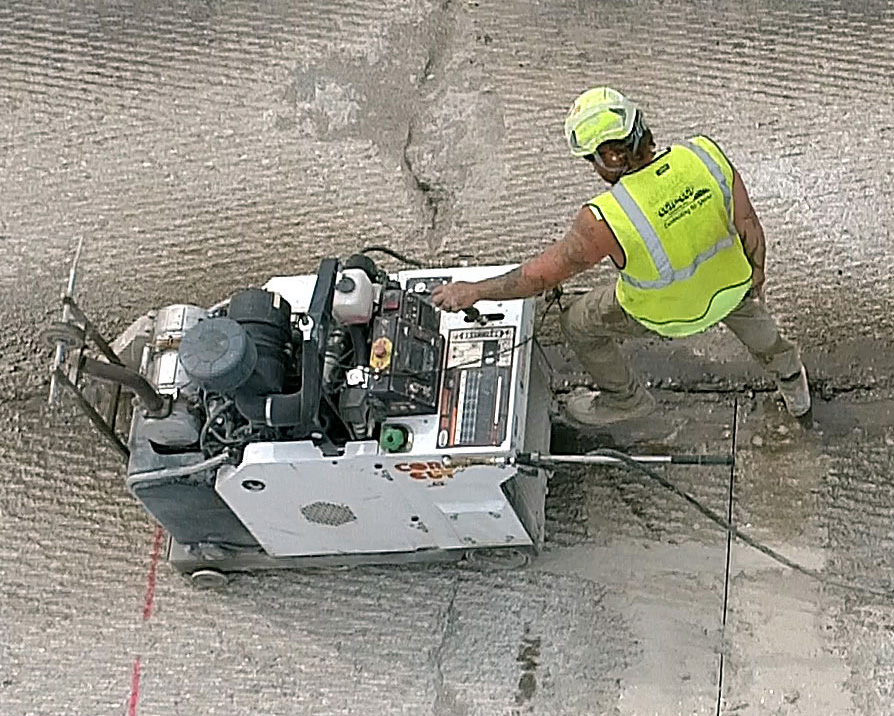
A long saw cut creates a different scanning challenge than a single core hole because the proposed path crosses a much larger area of concrete. What should you check before cutting concrete? The answer depends on the slab and project, but existing reinforcement, electrical conduit, plumbing, and other embedded items can all affect where and how a cut is made.
Using concrete scanning before trenching or saw cutting gives the crew a chance to compare the proposed cut line with actual field conditions. That information can be especially valuable when creating trenches for new utilities across an occupied or previously modified building.
3. Before Drilling Anchors or Fasteners Into Existing Concrete
Not every penetration is large. A project may require dozens of smaller holes for anchors, equipment, railing, supports, or other installations. That repetition matters. Even when each hole is relatively shallow, an anchor layout can cover a wide section of a slab or wall.
GPR concrete scanning can help identify reinforcement and other embedded objects within the scanned area. Reviewing those findings before drilling gives contractors better information to evaluate individual anchor locations, rather than treating the entire layout as clear based only on plans.
4. When Renovation Drawings Do Not Match Current Conditions
Existing buildings change. Utilities are rerouted, openings are added, equipment is relocated, and previous renovations may not be fully reflected in the drawings available to the current contractor. This is where field information becomes particularly important.
Plans are still useful for understanding the structure and intended layout, but GPR scanning provides a current look at the concrete in the proposed work area. When the project involves concrete cutting, coring, or new penetrations in an older or repeatedly renovated building, scanning can help crews compare what was documented with what is actually present.
5. Before Work Around Post-Tensioned or Heavily Reinforced Concrete
Some slabs require more planning because the concrete contains a dense reinforcement pattern or post-tension cables.
How do you know if concrete has post-tension cables or rebar where you need to cut? Existing plans may provide a starting point, but scanning the actual work area can help identify embedded elements before you finalize the proposed cut or penetration.
On these projects, location matters. GPR findings can give contractors information they need to discuss conflicts, shift openings when appropriate, or coordinate the next step before concrete is altered.
Schedule GPR Services Before the Layout Becomes Permanent
The best time for GPR services is before a proposed cut, core hole, trench, or anchor location turns into permanent work. Scanning earlier gives contractors and field crews more information while there is still time to evaluate conflicts and make practical adjustments.
Con-Cor provides GPR concrete scanning for projects throughout Southeast Wisconsin and the Midwest. Send us the jobsite address, proposed work area, penetration details, and project timeline to discuss scanning before cutting or drilling begins.