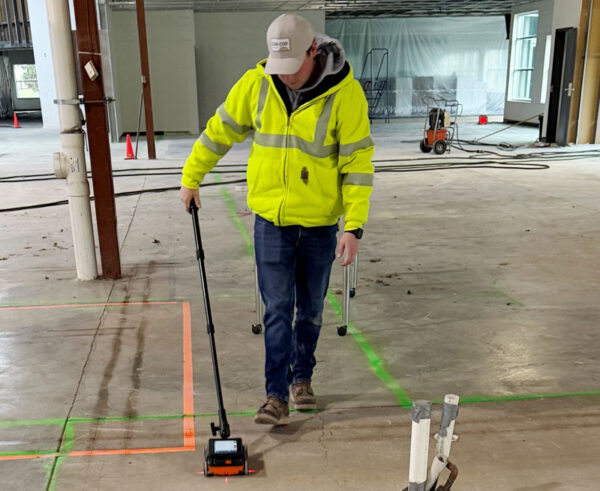

GPR scanning is used to look inside concrete before cutting, coring, drilling, trenching, or installing anchors. Instead of guessing what may be hidden in a slab, concrete laborers can use ground-penetrating radar to help identify embedded objects before work begins. This can make planning easier, reduce delays, and help crews avoid preventable problems in the field.
For many construction projects, especially remodels, tenant build-outs, and work in older facilities, drawings do not always show what is actually inside the concrete. GPR gives crews a clearer picture before they open up a slab, wall, or structural surface.
What Is Ground Penetrating Radar?
Ground penetrating radar is a non-destructive concrete scanning method. It sends radar signals into the concrete. When those signals hit an object below the surface, they reflect back to the scanning equipment. A trained technician then reads those reflections to help determine where embedded items may be located.
GPR does not remove concrete or damage the surface during the scanning process. It is commonly used before work begins so crews can better plan where to cut, drill, core, or anchor.
What GPR Scanning Can Help Locate
GPR scanning is commonly used to identify items that may affect construction work, including:
- Rebar and reinforcement
- Post-tension cables
- Electrical conduit
- Plumbing lines or sleeves
- Embedded utilities
- Unknown obstructions inside the concrete
These findings are typically marked on the surface so the crew can see areas to avoid or review before moving forward. The goal is not to make every job site perfect. The goal is to give crews better information before they begin work that penetrates the concrete.
When GPR Scanning Is Used in Construction
GPR is useful in many concrete and construction applications. It is often scheduled before:
- Core drilling for plumbing, electrical, or mechanical penetrations
- Saw cutting or trenching through a slab
- Anchor or dowel installation
- Remodels with limited or outdated drawings
- Tenant build-outs with changing layouts
- Facility updates where hidden utilities may be present
It can also help when multiple trades are working in the same area. If locations change in the field, scanning can help confirm what is below the surface before a crew makes the next cut or penetration.
How the GPR Process Works
The process is usually simple and field-focused.
First, the planned work area is reviewed. This may include the jobsite address, slab area, core locations, cut lines, or project drawings if they are available.
Next, the technician scans the concrete using ground-penetrating radar equipment. As the scan is completed, the technician interprets the data and looks for signs of embedded objects.
After that, findings are marked on the surface. These markings help show where obstructions may be located so the field crew can plan around them.
In many cases, a field report or project documentation may also be provided, depending on the scope of work and project needs.
Why GPR Matters Before Cutting, Coring, or Drilling
Cutting into concrete without knowing what is inside can create delays, added costs, and jobsite problems. A saw cut, core hole, or anchor location may seem simple until it conflicts with conduit, reinforcement, or a post-tension cable.
GPR helps reduce that uncertainty. It gives project managers, superintendents, and field crews more information before work begins. That can make it easier to adjust layouts, coordinate trades, and keep the project moving. For concrete work, even small changes in location can make a big difference. Scanning helps crews make those decisions with better visibility.
Schedule GPR Scanning Before the Work Begins
GPR scanning is a helpful step before concrete cutting, core drilling, trenching, or anchoring. It helps identify what may be hidden inside the concrete so crews can plan with fewer surprises.
Con-Cor provides ground penetrating radar services for projects throughout Southeast Wisconsin and beyond. If your project involves cutting, coring, drilling, or scanning concrete before construction work begins, contact Con-Cor to share your site details and timeline.